
Operations Notes
International guests order less when they cannot read the menu
Inbound tourism to Korea is growing and global interest in Korean food is high. This note explains why small stores need multilingual QR menus, food photos, and option descriptions.

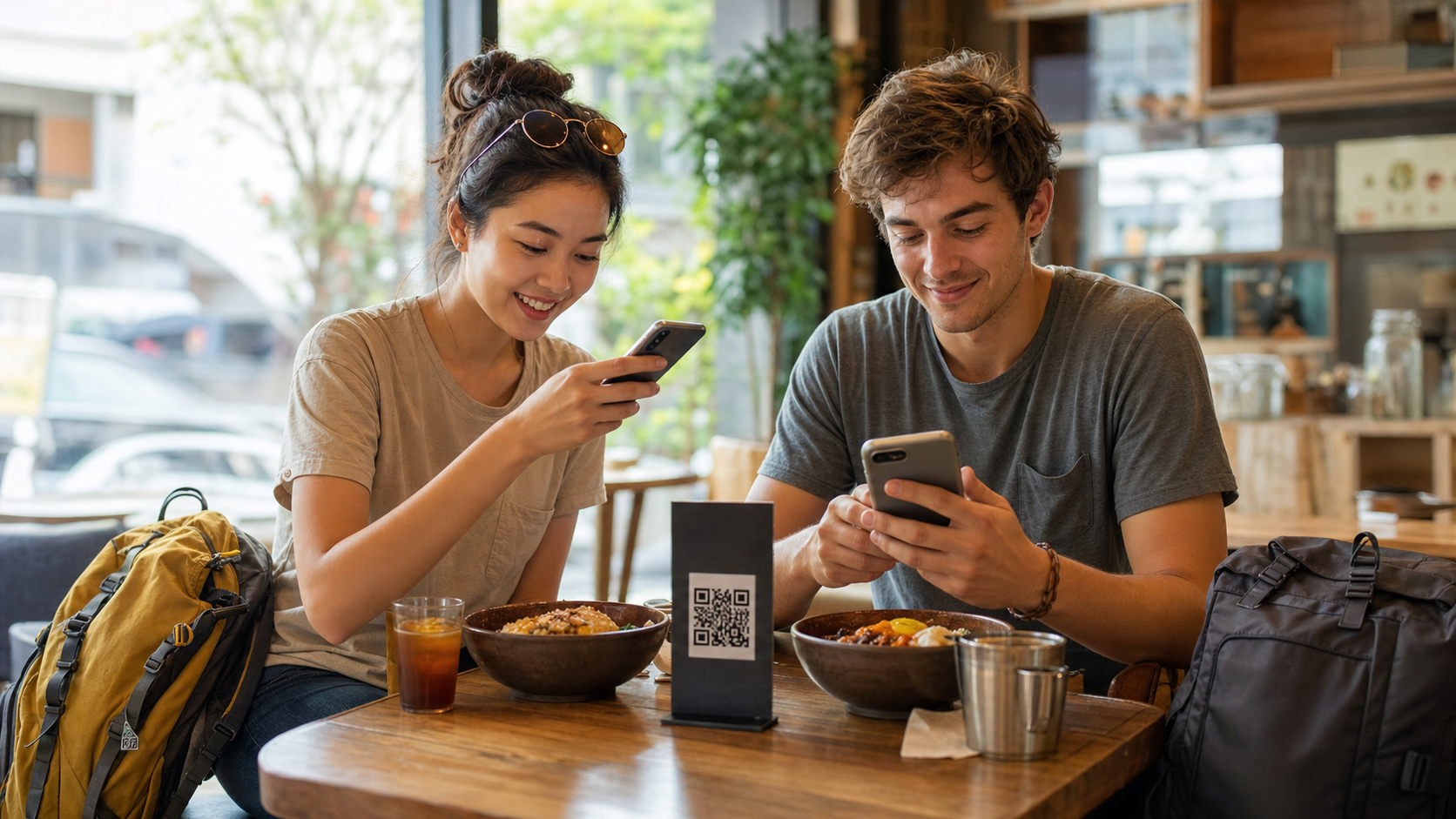
International guests are already reaching the store door
Inbound tourism to Korea is growing quickly again.
Yonhap, citing the Ministry of Culture, Sports and Tourism, reported that Korea received 1,993,128 international visitors in June 2026, up 23.1% year over year. In the first half of 2026, inbound visitors reached 10.71 million, up 21.3% from the same period a year earlier. The same report said foreign card spending in the first half reached KRW 10.0389 trillion, up 50.8% year over year.
These numbers are not only about airports, hotels, and duty-free stores.
International guests enter local cafes, small restaurants, bakeries, casual bars, and neighborhood stores. When they sit down, the first thing they meet is often not a staff member. It is the menu.
Korean food is already something guests are curious about
It is no longer safe to assume international guests know nothing about Korean food.
According to the 2025 overseas Korean food consumer survey published by Korea's Ministry of Agriculture, Food and Rural Affairs, Korean-food awareness reached 68.6%. Satisfaction among people who had eaten Korean food was 94.2%, and 90.7% of Korean-restaurant visitors said they intended to revisit. The Korean Food Promotion Institute summarized the same survey, noting the high satisfaction level among Korean-food eaters.
International guests are not entering Korean stores because they know nothing.
They often enter because they are curious. Korean fried chicken, kimchi, bibimbap, bulgogi, ramen, tteokbokki, traditional tea, and desserts are already familiar from travel videos, social content, and Korean culture.
The problem happens at the final step: turning interest into an order.
When guests cannot read the menu, they quietly reduce the order
Store losses do not always appear as complaints.
When international guests do not understand the menu, they often reduce the choice set silently. They skip unfamiliar items, choose only the safest dish, or avoid add-ons when options look complicated.
Common moments look like this:
- A guest wants to try tteokbokki but cannot understand the spice level.
- The difference between kimchi jjigae and doenjang jjigae is unclear.
- Meat, seafood, dairy, or nut ingredients are not easy to check.
- A set menu does not explain how many people it is for.
- Hot or iced, size, topping, and add-on choices are confusing.
- The guest feels uncomfortable asking staff in English and chooses the safest item.
The guest may not complain. But the order becomes smaller.
In a cafe, a signature drink can become only an Americano. In a casual Korean restaurant, side dishes or drinks may never be added. In a dessert store, a guest may order one familiar item instead of exploring a set.
That is quiet revenue loss.
Translating only menu names is not enough
A multilingual menu is not just a list of translated item names.
A good multilingual menu answers the questions guests have before ordering:
- What kind of food is this?
- Is it spicy, salty, or mild?
- Does it contain meat, seafood, dairy, or nuts?
- Which options should I choose?
- Is it for one person or for sharing?
- What does the portion and actual dish look like?
- Is it sold out or available today?
International guests do not need every staff member to speak perfect English.
They need a first screen where they can understand the menu in their own language, see photos, choose options, and leave requests when needed.
A PDF menu behind a QR code is not a multilingual ordering experience
Putting a QR code on the table does not automatically make the experience easier.
If the QR opens a paper menu as a PDF, guests still pinch and zoom on a small screen. Even when another language file exists, they may need to reopen a separate document. Options and sold-out status are hard to keep current.
From the guest's point of view, the flow should be simple:
- Scan the QR.
- Choose a language.
- See food photos and descriptions.
- Understand options.
- Have table information connected automatically.
- Order or call staff.
That flow has to stay connected for a multilingual QR menu to become actual orders.
JEMPO helps international guests reach the order
JEMPO connects menus and ordering around the table QR.
Guests scan the QR without installing an app and view the menu in the language the store has prepared. Photos, descriptions, prices, options, and sold-out status can be shown on a mobile screen, and staff calls can live in the same flow.
For owners, this means international guests do not need a full explanation from the beginning every time. Staff do not need to speak perfect English for the menu to explain itself first.
This matters even more in small stores.
When only one or two people are operating, long menu explanations can slow preparation, service, and checkout at the same time. When the menu explains itself in the guest's language, staff can focus on confirmation and hospitality.
A foreigner-friendly store is not just a store with good English
International tourism to Korea is growing. Interest and satisfaction around Korean food are already high.
But if the menu cannot be read, that interest does not become an order.
A foreigner-friendly store is not simply a store where staff speak English well. It is a store where guests can understand the menu in their own language, check photos, choose options, and order without pressure.
JEMPO helps that preparation start with one table QR.
International guests are already coming to Korea. They are already curious about Korean food. Now stores need to make the menu readable so guests do not reduce the order.
References
- Yonhap, "6월 방한 외국인 관광객 199만명…상반기 1천만명 돌파." 2026-07-28. Cites Ministry of Culture, Sports and Tourism figures.
- Ministry of Agriculture, Food and Rural Affairs, "2025 overseas Korean food consumer survey.".
- Korean Food Promotion Institute, "2025 overseas Korean food consumer survey.".